



-
November to April
-
Includes certified mountain guide
-
All meals included in this option
-
5603 msnm
-
English, Español
-
Included from your accommodation or airport in Santiago
-
30-42
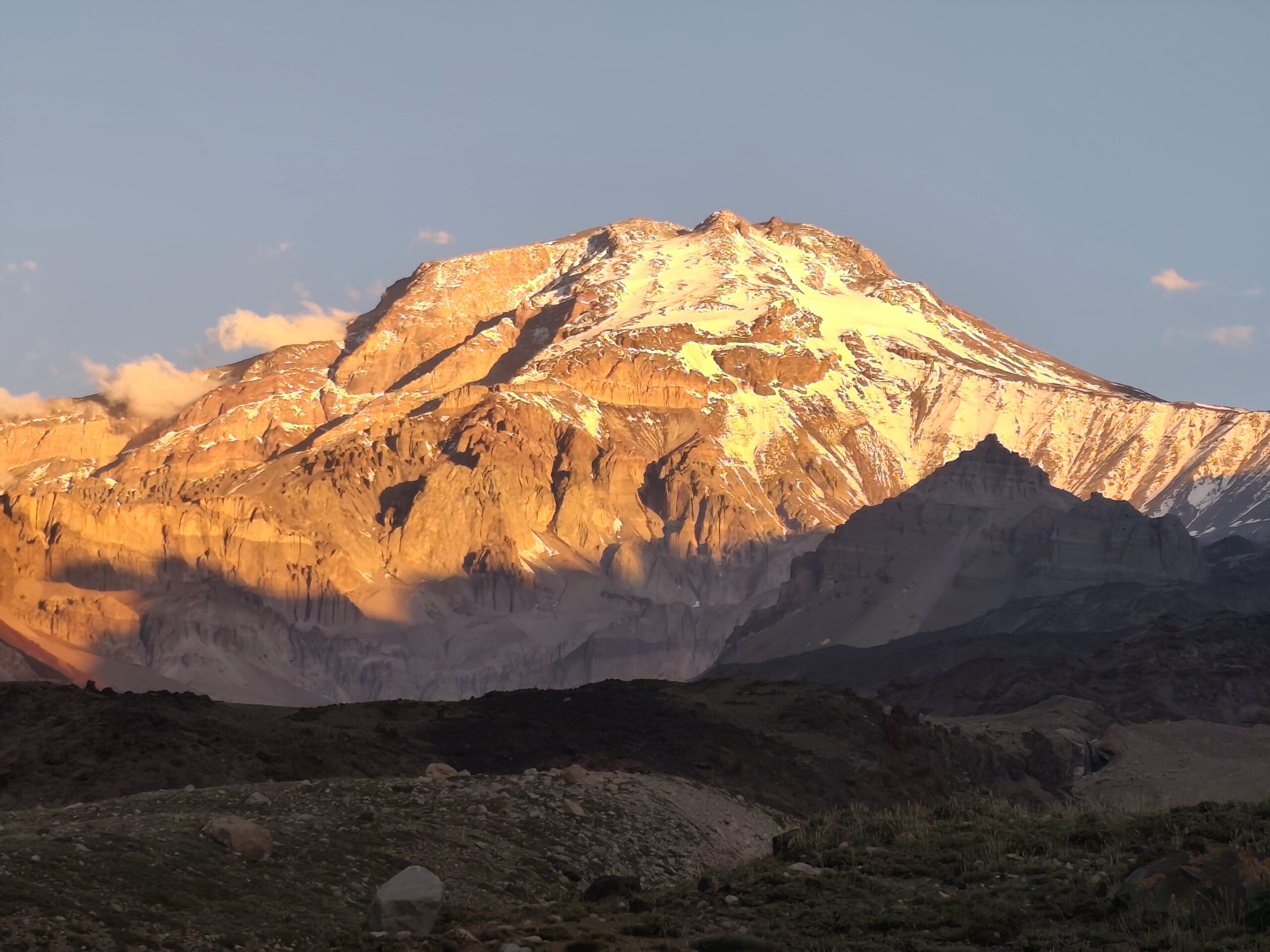
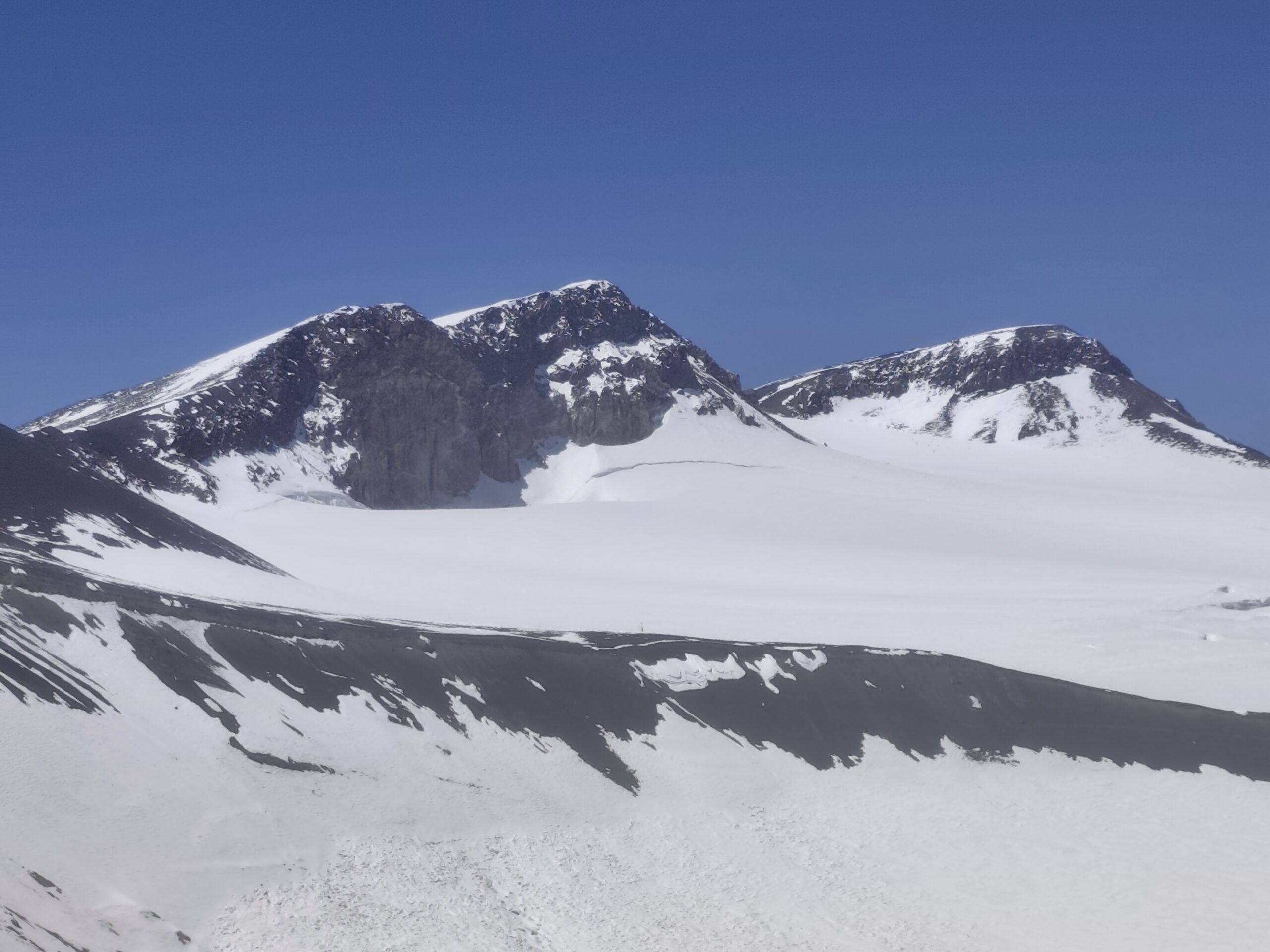
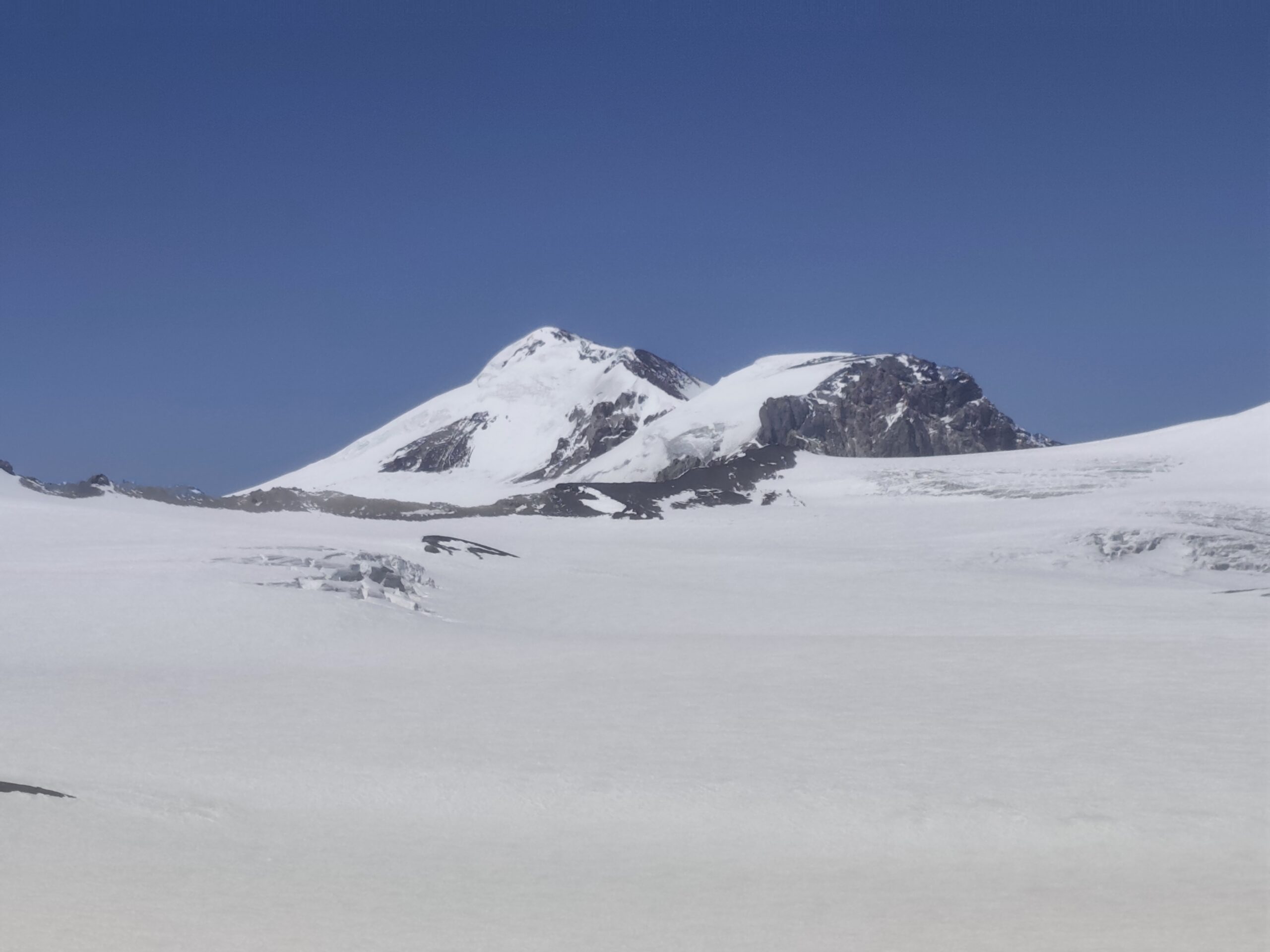
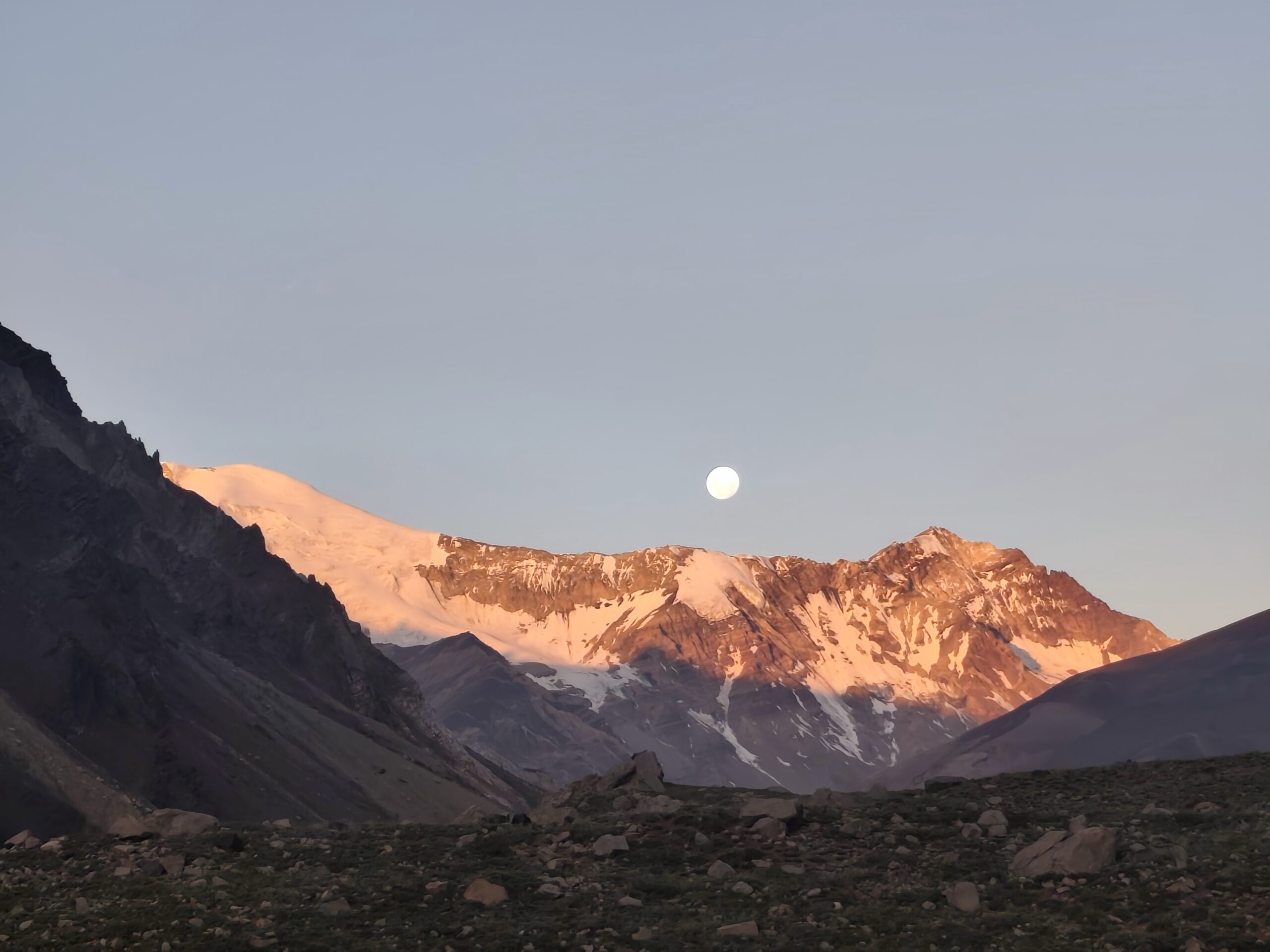
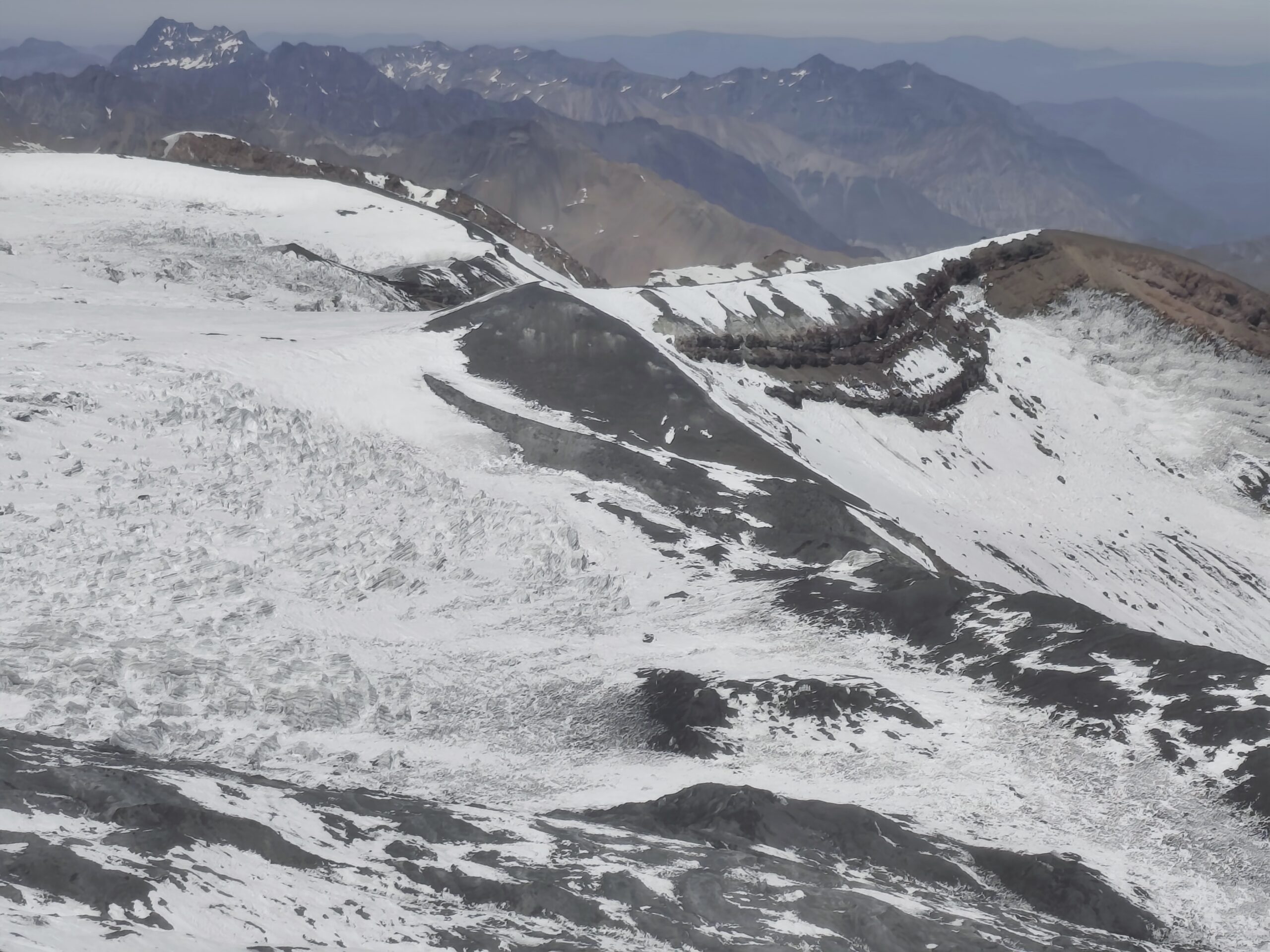
Tupungatito Volcano (5,603 meters above sea level) is one of the most active volcanic centers in central Chile, located on the border with Argentina, specifically in the Metropolitan Region, at the bottom of the Colorado River valley. In contrast to its neighbor, the imposing Tupungato Volcano (extinct and taller), Tupungatito remains on green alert, yet exhibits constant activity evident in its eight craters and persistent sulfur fumaroles. Its last significant eruption occurred in 1959–1960, leaving behind deposits of ash and igneous rocks that today contrast with the perpetual white of its glaciers.
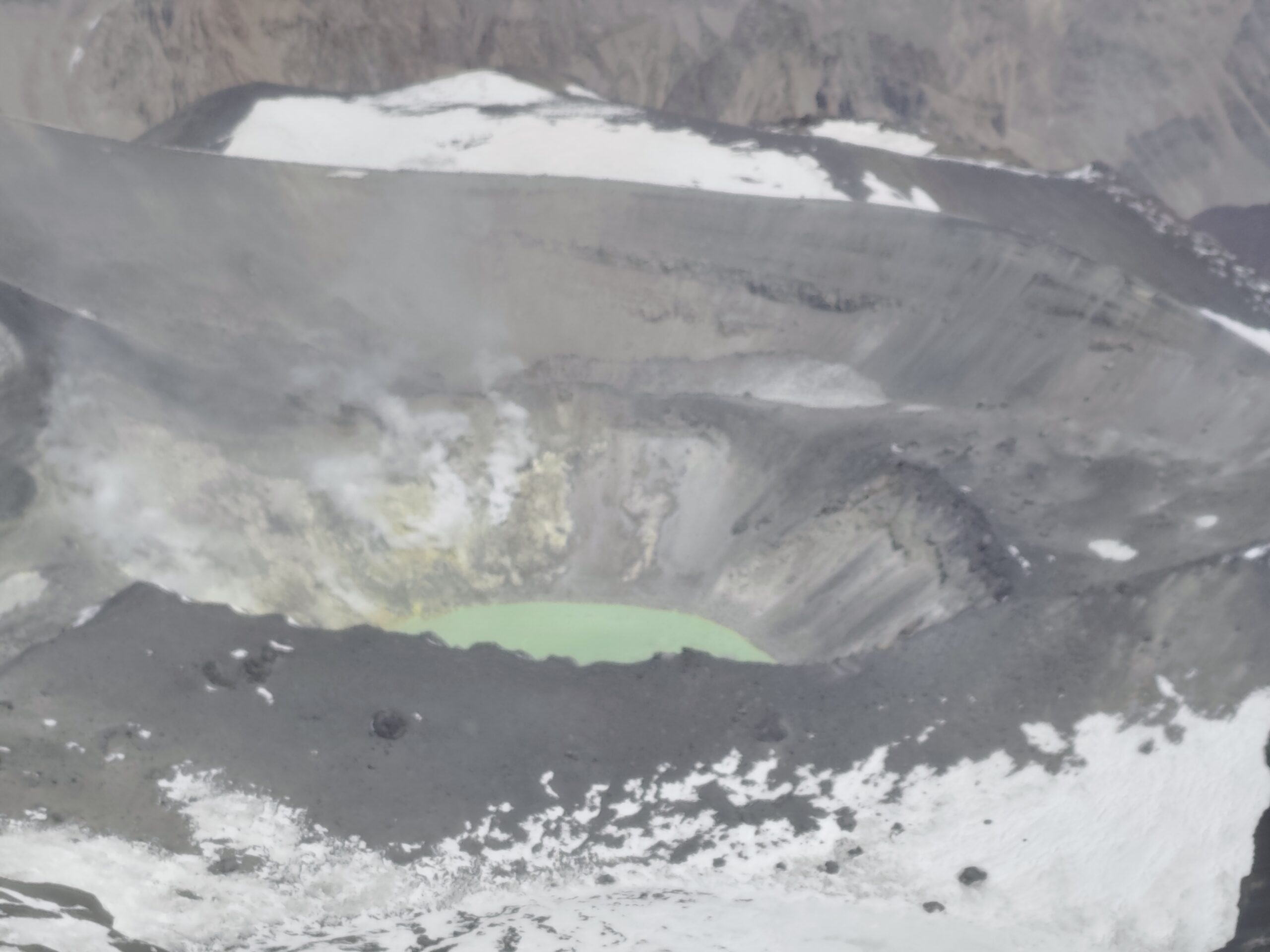
What makes this mountain range unique is its summit, which overlooks a caldera 4 kilometers in diameter, home to glaciers that feed major watersheds and an acid lake of an intense turquoise color.
The ideal season to attempt the summit is between November and April, when the Andean climate is most stable. During these months, temperatures are more moderate, although the terrain remains a high-mountain challenge. In contrast, during the winter and early spring, the volcano is battered by winds exceeding 100 km/h and temperatures that easily drop below -30°C, which, combined with heavy snow accumulation, makes for an extremely challenging environment.
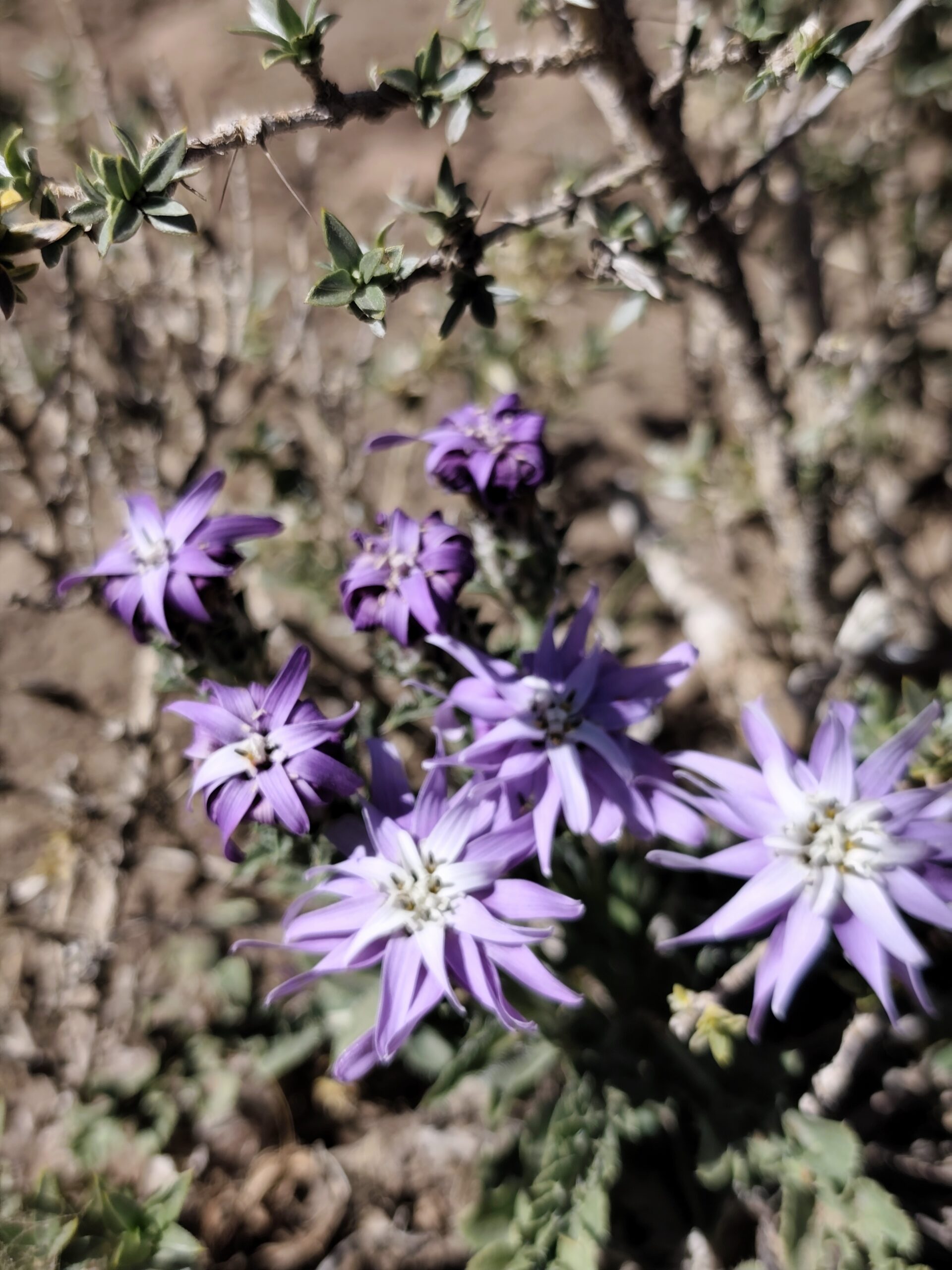
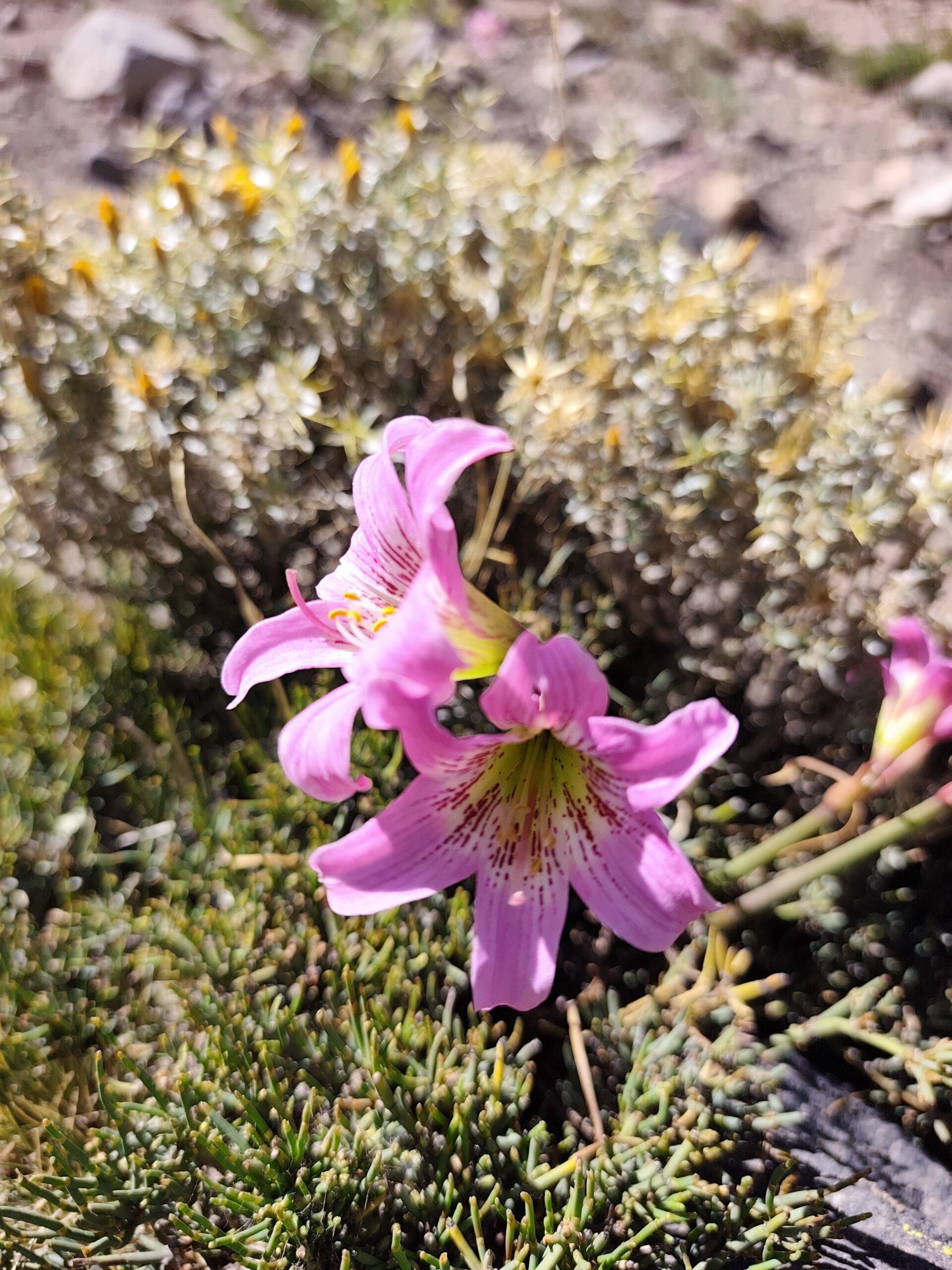
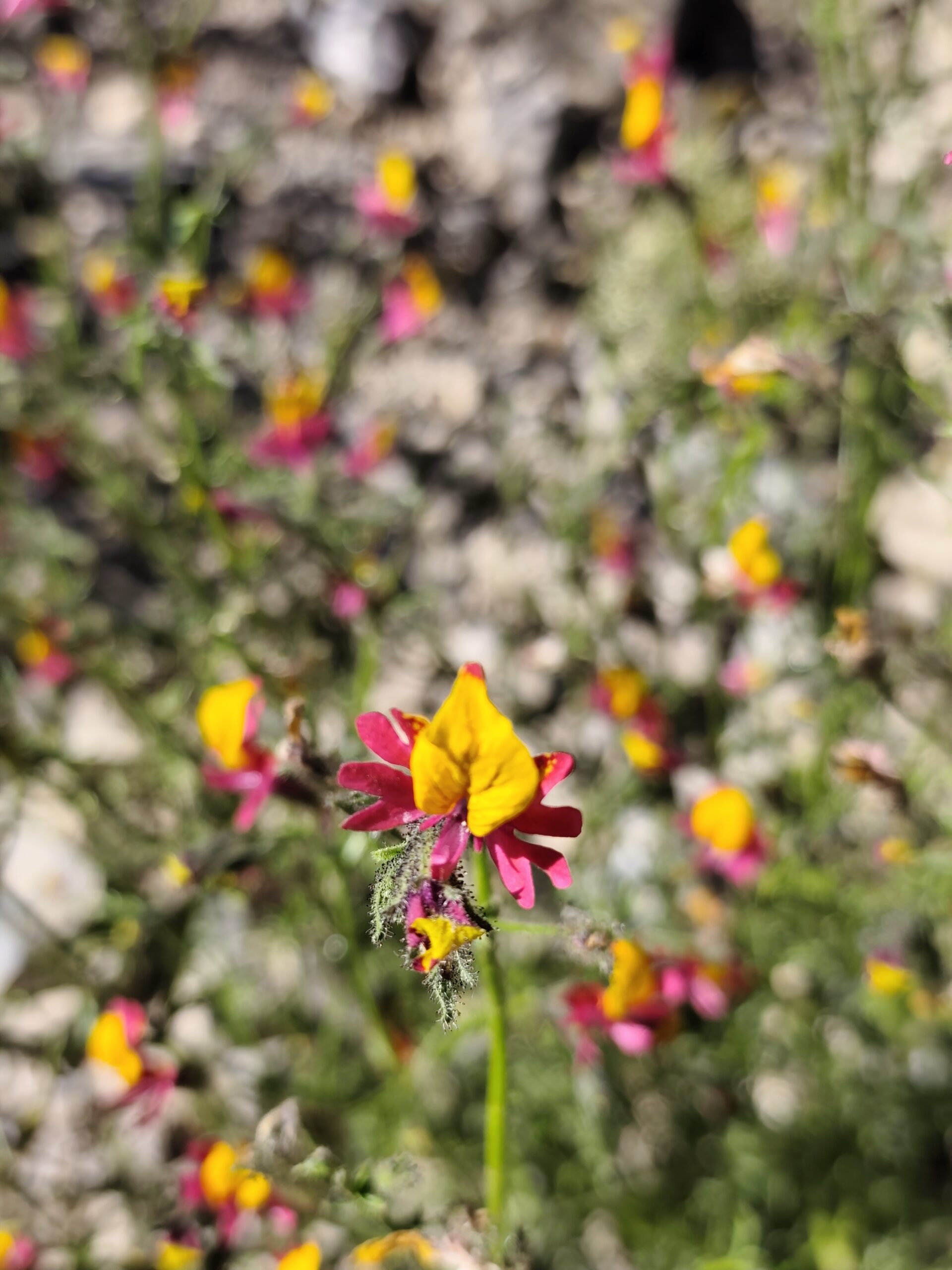
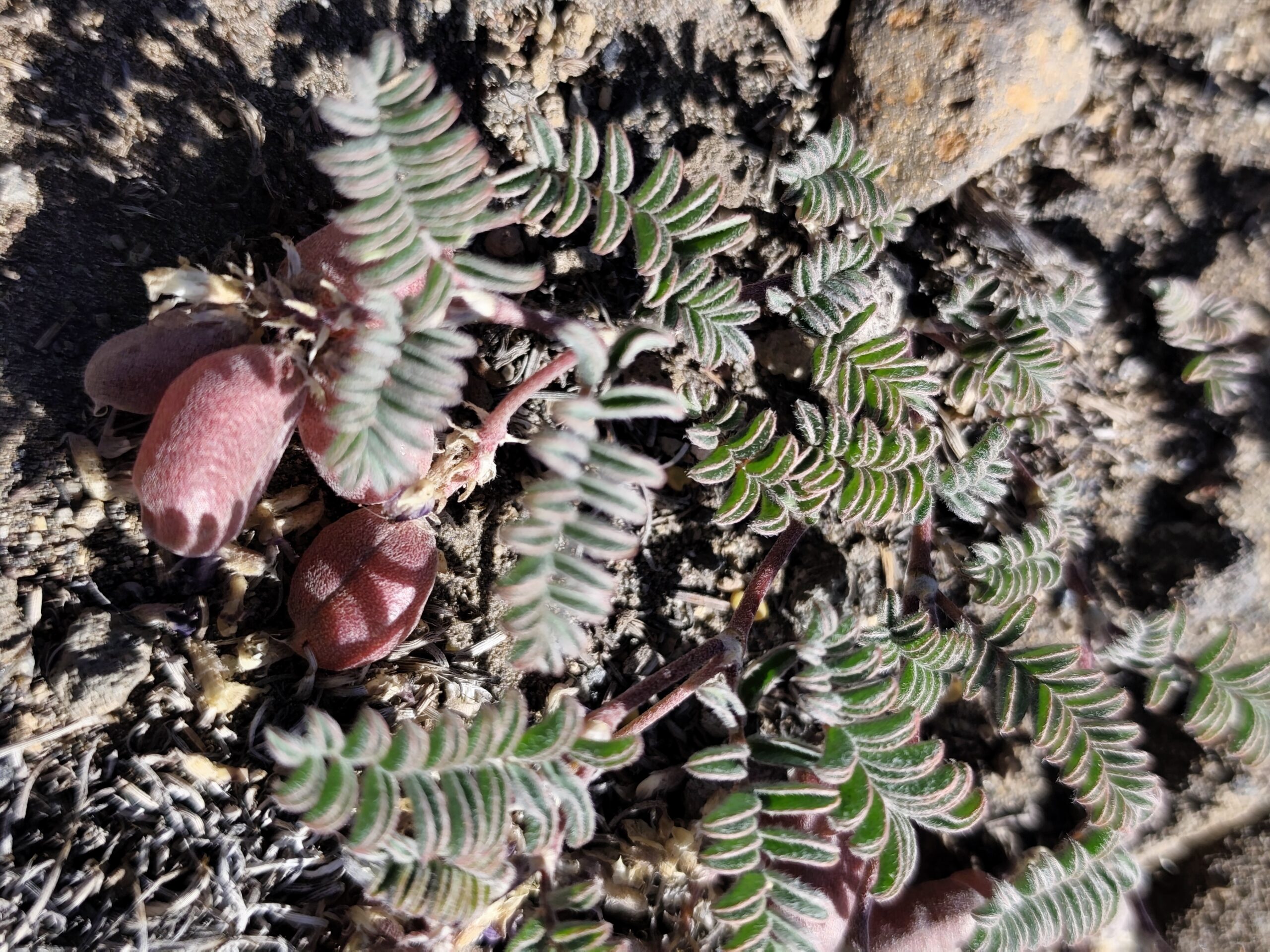
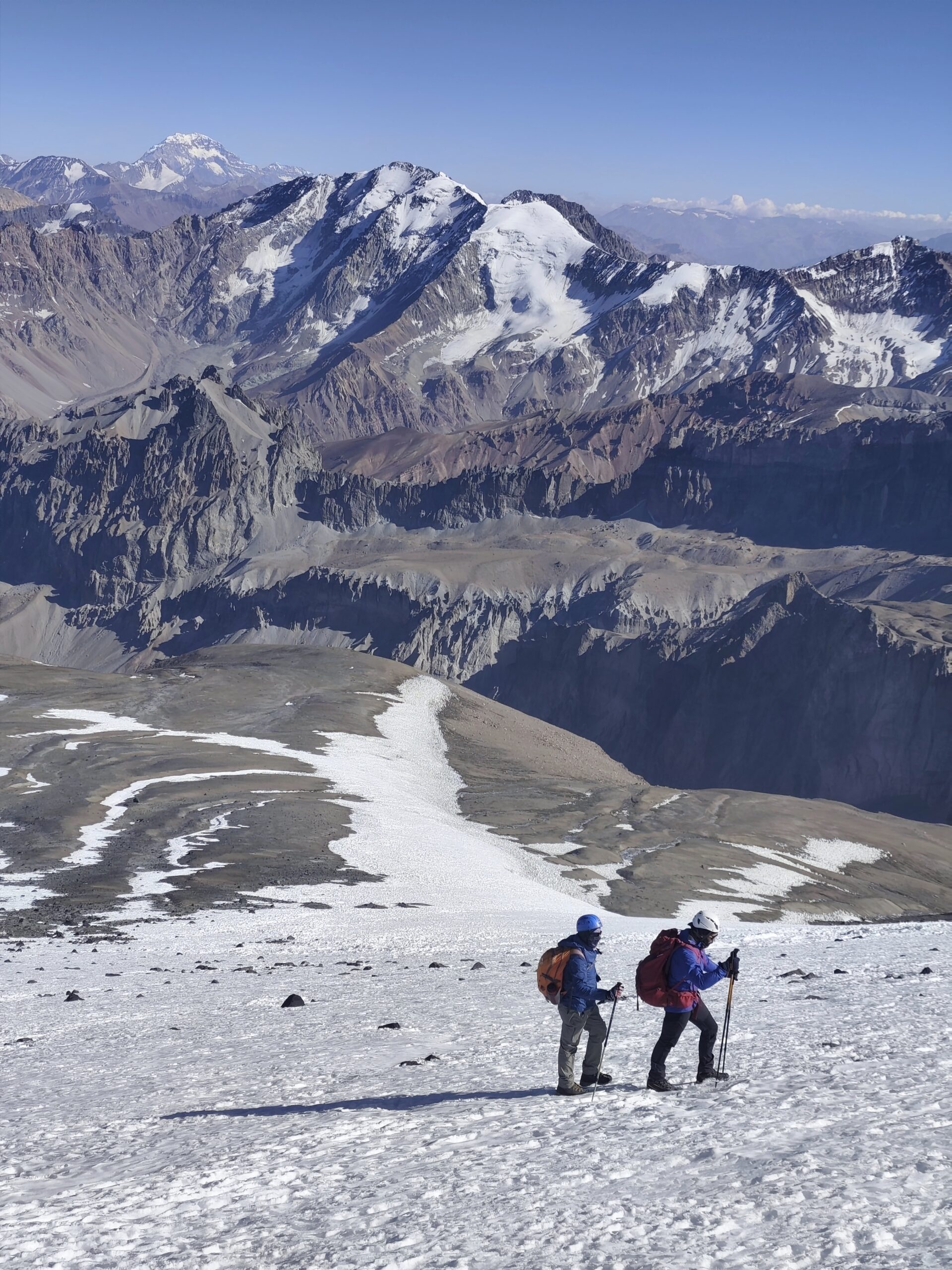
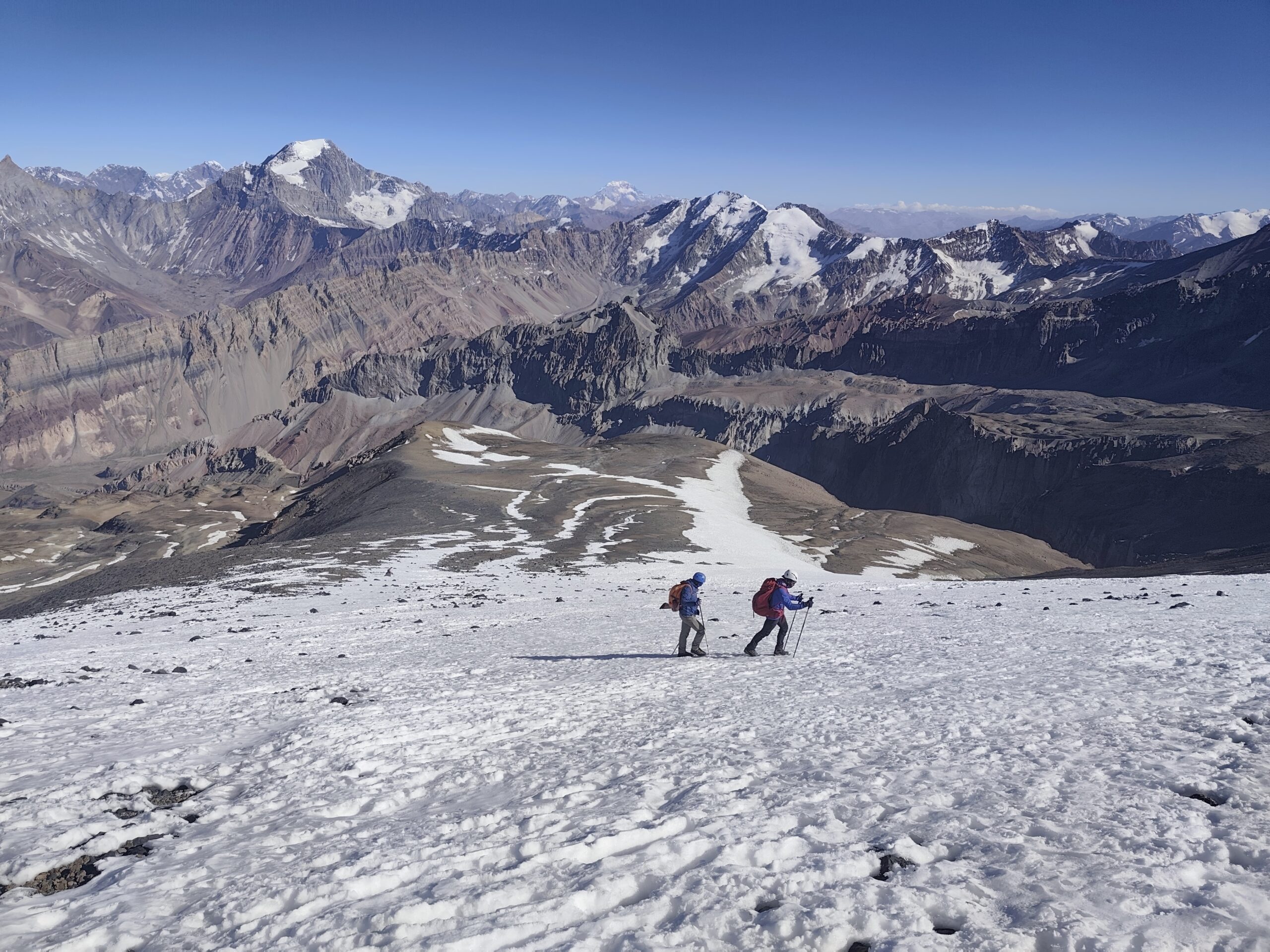
The route to Tupungatito passes through various ecological zones, offering opportunities to spot species adapted to high altitudes and arid conditions. Among the notable flora and fauna in this part of the Central Andes are:
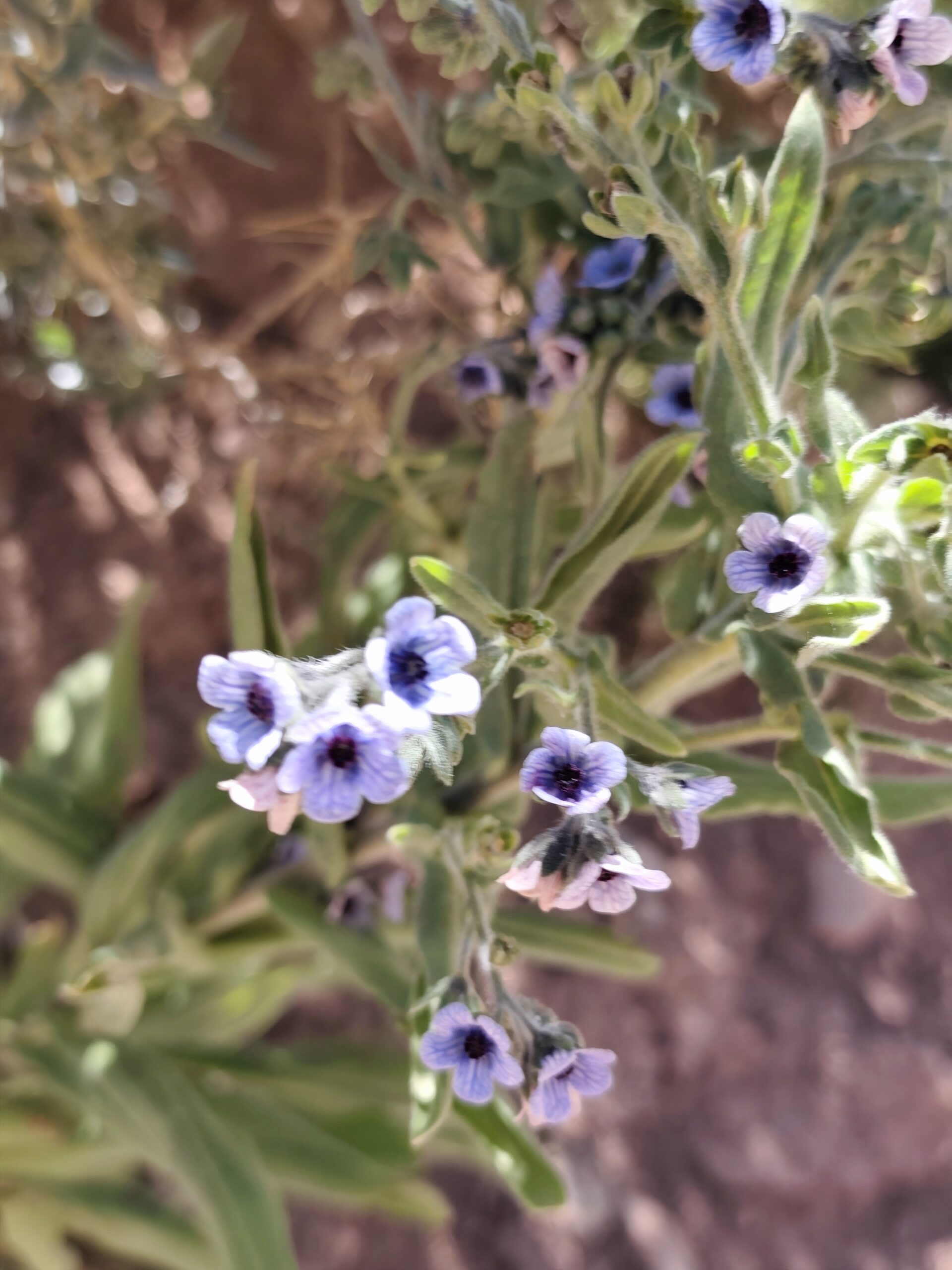
La Flor de la Cuncuna (Phacelia secunda), Llareta (Azorella compacta) that covers the rocks in high-altitude areas, Soldadito de la Cordillera (Tropaeolum polyphyllum) and various species of Capachitos (Calceolaria spp.) that can resist extreme conditions.
Fauna: This is the natural habitat of the Andean condor (Vultur gryphus), which takes advantage of the thermal currents in deep valleys. It is also possible to spot the Andean Carancho (Phalcoboenus megalopterus), Culpeo Fox (Lycalopex culpaeus) and, in high-altitude floodplains, the Juarjual Duck (Lophonetta specularioides). With a bit of luck, on the most remote slopes, you can spot groups of guanacos (Lama guanicoe).
Technical Difficulty: Easy.
Physical Difficulty: High. Good physical condition is recommended for this activity, which is ideal for people who enjoy trekking or sports.
Requirements: Health according to activity. In case of illnesses such as asthma, diabetes, or others, you must bring medication prescribed by your doctor.
Responsibilities:
- No actions that jeopardize the safety of the participant or other participants will be carried out.
- Participants should wear comfortable clothing suitable for the activity. We recommend hiking pants or softshell pants, merino wool socks or similar, two quick-drying long-sleeve shirts, a base layer, a warm down jacket (800 fill power or higher), and a waterproof jacket.
- Do not consume alcohol or any narcotic drug before or during the activity.
- A medical form and risk acceptance letter must be completed.
Additional:
- Groups of 6 people will be accompanied by 3 mountain guides.
- Each guide carries a first aid kit, rope, harness, ice screws, slings, tubular slings, carabiners, GPS with satellite messaging, and more.
- If you have your own technical equipment or transportation, the cost is lower. Contact us for more details.
- Experience in mountaineering or trekking is necessary to undertake this expedition.
- This itinerary is designed for people who have already slept at an altitude of over 5000 meters.
- If you haven't acclimatized before, you can extend the itinerary to 5 or 6 days to increase your chances of reaching the summit.
- The listed price includes the porterage of your gear by mule to make the expedition easier (This porterage service is to the glaciologists camp at 4,800 meters and also for the return trip; from the glaciologists camp to the summit, you must carry a small backpack with personal gear). If you have experience carrying backpacks weighing over 12 kilograms, it is possible to complete the expedition without mules, which reduces the cost. Send us a message for more details.
Highlights
- You'll visit the most active volcano in the Metropolitan Region
- You'll be able to see the beauty of the acidic lagoon located inside the Tupungatito crater
- You'll stay at one of Chile's most modern mountain Refuges
- A Rich Variety of Native Flora and Fauna
- we'll take a look at the beautiful Baños Azules